The city grammar: three places layered into one
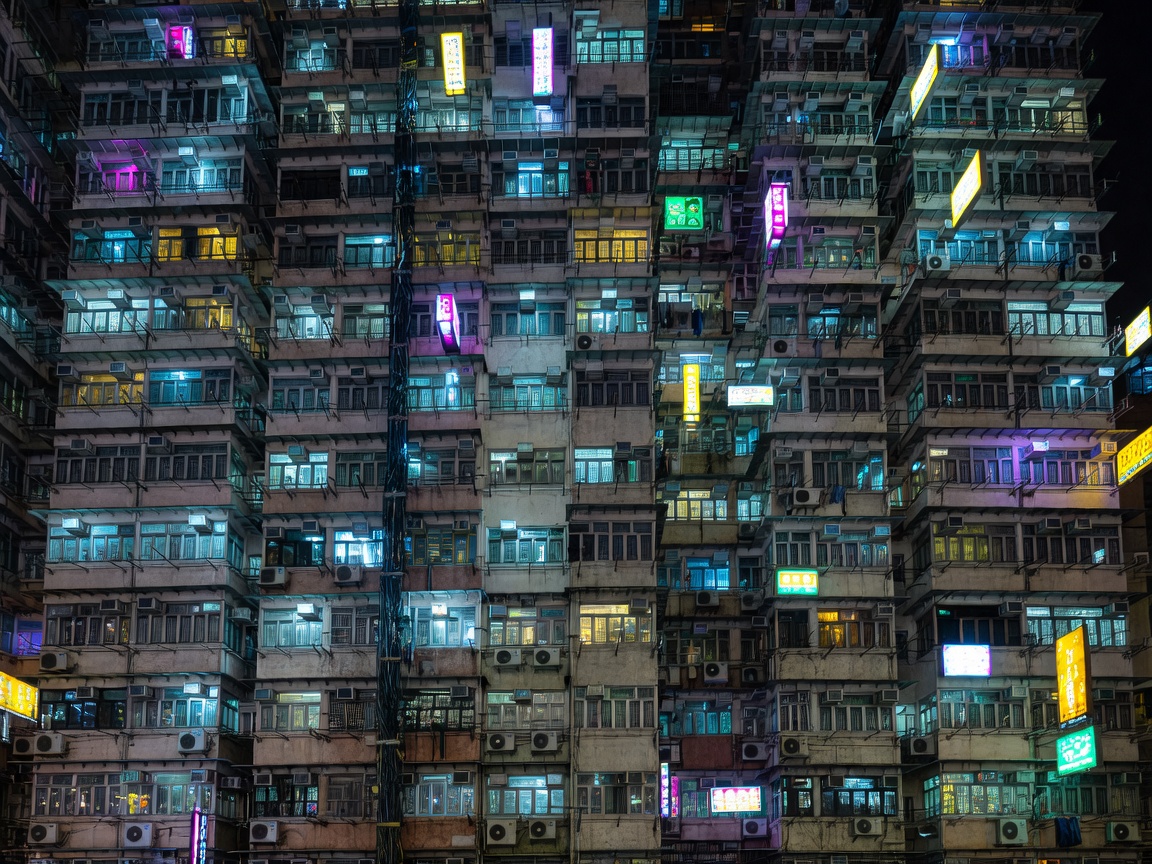
The cyberpunk city is a composite, and knowing the layers helps you read any new one. The density and the improvised verticality come from Kowloon Walled City, the demolished Hong Kong block whose photographs of stacked flats, dripping pipework and light shafts became the genre's reference for how people actually live inside a stack. The signage comes from Tokyo: Shinjuku and Kabukicho at night, with vertical illuminated boards in kanji and katakana competing for the same sightline, later joined in the fiction by hangul and Latin script until no single language owns the wall. The chassis is Los Angeles as Blade Runner rebuilt it, low-rise and sprawling with a few monumental pyramids, everything retrofitted so ducts and cables are always visible. Drop those three onto a rain schedule and you have the default.
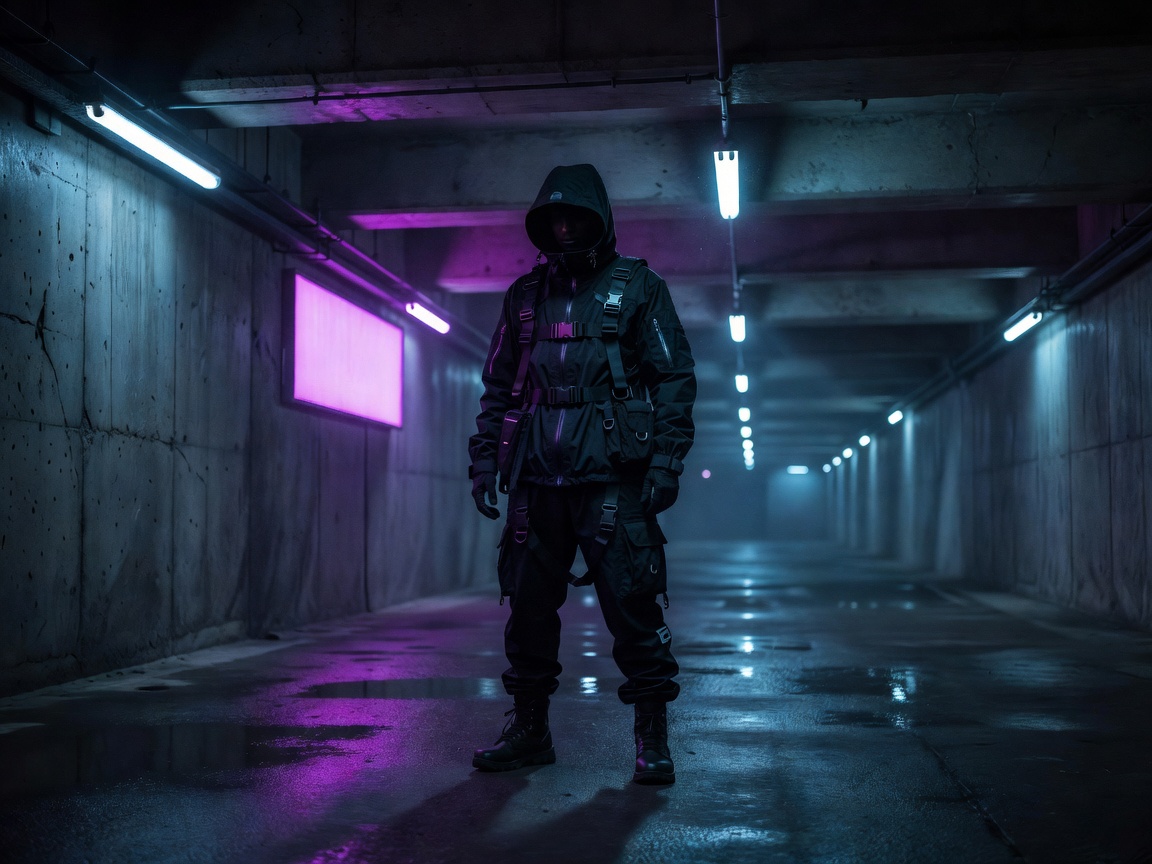
What makes the rain load-bearing rather than decorative is reflection. Wet asphalt doubles every light source and lets colour reach the ground, so the pavement carries the signage and the street reads as a second sky. A dry cyberpunk city is possible, and Blade Runner 2049's orange Las Vegas proves it, but it has to find another way to put light underfoot.
Where the palette comes from
Cyan and magenta are not arbitrary. Real street light in the period the genre was formed was sodium-vapour amber, and neon tubing gave red-orange from neon gas and blue from argon and mercury, with phosphor coatings producing the pinks and greens. The saturated cyan and magenta of the genre are those tube colours pushed towards each other and set against the darkest ground the film stock or the monitor could hold. CRT phosphors did the rest, since the glow of a screen in a dark room is the genre's domestic version of the street. The insider distinction is that this is a two-accent palette on black, not the wash of purple that later shorthand turned it into. Keep the black deep, let the two accents fight, and use amber sparingly as the human, sodium-lit note.
Fashion: what techwear inherits
The genre's wardrobe has three ancestors. The first is the trench coat and mirrorshades pairing from the Sprawl and from the Blade Runner detective, which is noir's costume with the surface made reflective. The second is the leather and neon of the biker gang, Kaneda's red jacket in Akira and the crews in Edgerunners, which is the punk half of the word made visible. The third is the implant itself as adornment: Molly's inset lenses and burnished blades, the visible port, the seam where the chrome meets the skin.
Techwear is the wearable synthesis. The vocabulary is functional: waterproof shell fabrics with taped seams, articulated knees and elbows, modular straps and harness lines, magnetic or asymmetric closures, pockets designed for a specific object rather than a general one. The palette is nearly always black with one accent, and the silhouette is layered so that the garment reads as a system. The distinction that matters to people who wear it is between clothing that is actually built for weather and movement and clothing that only quotes the look. The former ages into the aesthetic; the latter looks like a costume within a season. A separate lineage, the UV-reactive fibres, goggles and synthetic hair of cybergoth, comes out of club culture rather than the fiction and is its own thing, related but not the same.
The sound, from the CS-80 to darksynth
Vangelis's Blade Runner score, built largely on the Yamaha CS-80, gave the genre its sonic template: slow, brass-like synth pads, saxophone over rain, and a sense of enormous space above a crowded street. Kenji Kawai's Ghost in the Shell score went the other way, with layered choral chant in an archaic register, so the cyborg's world sounds like a ceremony. Geinoh Yamashirogumi's music for Akira is the third pole, gamelan and noh-inflected chant driving the bike chase. Yoko Kanno's work on Stand Alone Complex moves between all three and adds momentum.
The later strands split by mood. Synthwave is nostalgic and melodic, the sound of the neon grid seen fondly from a distance. Darksynth, associated with artists such as Perturbator and Carpenter Brut, is the aggressive descendant, closer to horror soundtracks and industrial metal, and it is the strand most games reach for. Industrial and EBM, from Front 242 and Skinny Puppy through Front Line Assembly and Nine Inch Nails, supply the genre's live-performance lineage and its sense that machines are angry. When a soundtrack works in this space it is usually because it has picked one of these lineages and committed, rather than blending them into an arpeggiated wash.
Type and interface
The genre's typography has a machine-readable ancestry: OCR-style faces, monospaced terminal text, and Japanese scripts used for texture by audiences who could not read them, which is a habit worth being honest about. The falling katakana of The Matrix's code is the popular version. On screen, interface design tends towards translucent panels, bracketed labels, scanlines and deliberate glitch displacement, all of which say that the display is a physical thing that can fail. Deus Ex's amber triangles and Cyberpunk 2077's red-glitch menus are the two poles of the current in-game convention: the former warm and corporate, the latter hostile and broken.
Building the look without building a costume
- Start from black and add exactly two saturated accents. Purple wash is the shorthand; two accents fighting is the genre.
- Put light on the floor. Reflection, spill or under-lighting; a lit ceiling and dark floor reads as a different genre.
- Show the retrofit. Visible cable, duct, patch and repair, over anything that looks freshly manufactured.
- Choose one sonic lineage and stay in it for the duration.
- Let function lead the wardrobe. If the strap holds nothing, cut it.